YOUR CART
IS EMPTY
IS EMPTY

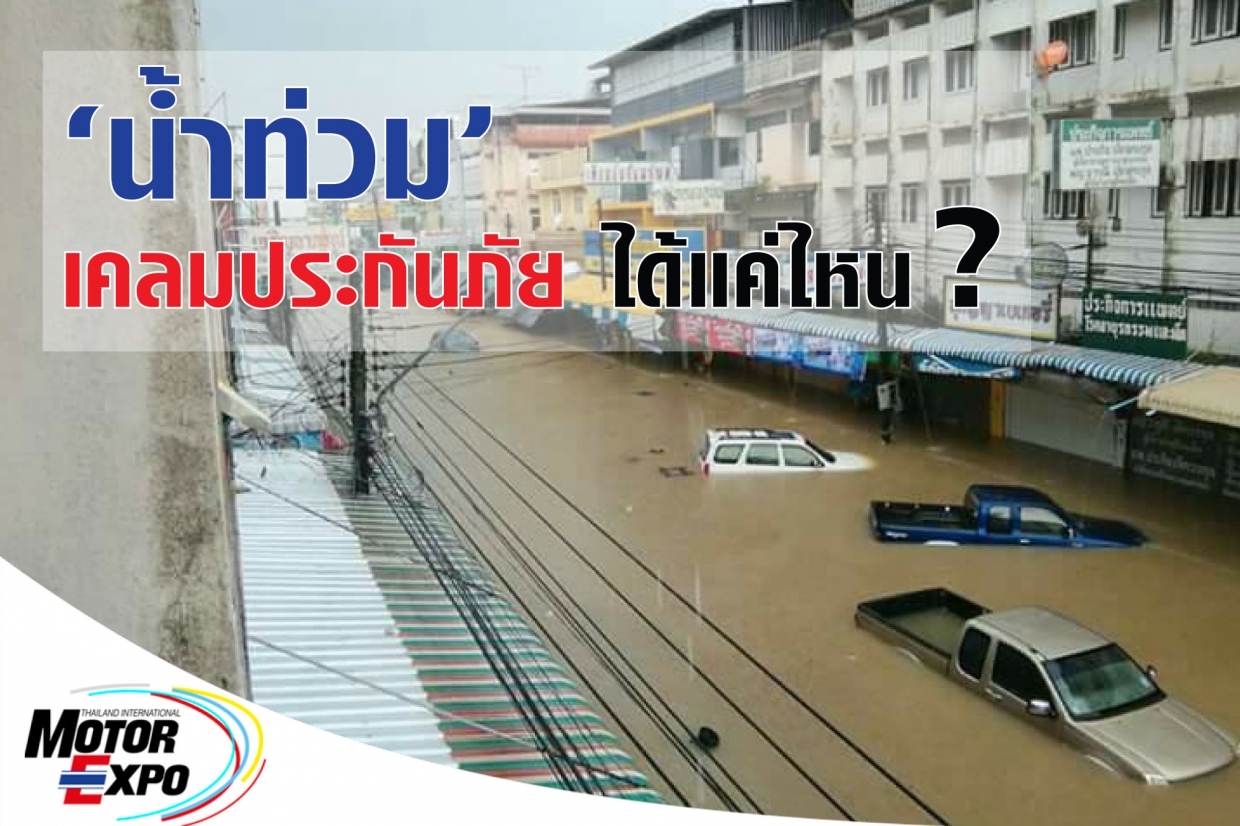
The news of “flooding” has deeply affected us. Houses and belongings have suffered enormous damage. If buildings and houses are insured, it might help alleviate the burden somewhat. The same applies to "cars." Such extensive flooding is often unavoidable, or if it's beyond control, the car unfortunately has to be submerged. So, what should we do when our car is submerged or when we have to drive through [deep water]? Damage is inevitable. If someone has "car insurance," what should they do? And if a car "has no insurance," what should be done? Let's find out!
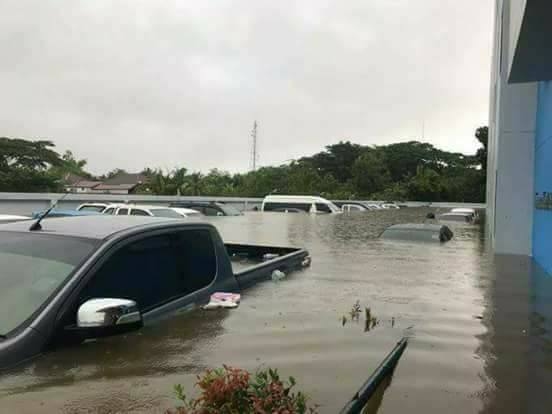
In case the car is parked and submerged to a level high enough to cover the engine, proceed as follows:
● Absolutely do NOT start the car or turn the key to the ON position! This is because cars have electronic devices and electrical systems that control various functions, which could short-circuit and cause damage. The best way is to
● Immediately disconnect the battery terminals! To cut off the power supply
● Take the car to a garage or service center to change all fluids, such as engine oil, brake fluid, power steering fluid, differential fluid, coolant, etc.
● For the suspension or support system, technicians should apply new grease to the ball joints and check the brake system for any abnormalities. Especially for cars with drum brake systems, water may enter, so they must be disassembled for cleaning.
1. Take photos of the car while it is flooded (capture the license plate to prove it's the same insured vehicle).
2. Inspect the damage to the car and take photos, along with recording the date, time, and location of the flood.
3. Check the policy and read and understand the terms and conditions thoroughly (you may consult your insurance agent).
4. File a claim by phone with the insurance company (note down the name of the person who received the notification, date, time, and claim number).
5. Schedule an inspection of the car's damage with the insurance company official to prepare for repair.
6. If the car cannot be driven, you must request the company to send a tow truck (the company is responsible for towing fees not exceeding 20% of the repair cost).
7. Once the car is at the garage for repair, keep the receipt, check how many days the repair is scheduled for. It is necessary to diligently check the condition periodically. If the company delays arranging repairs or the garage is unduly late, you can claim for loss of use of the car.
1. The policy does not cover if the premium has not been paid (Cash Before Cover).
2. The insured must bear the first 1,000 Baht (damage not caused by collision).
3. Accessories, audio systems, and decorations can only be claimed if coverage was declared and purchased from the start date of the insurance (for subsequent additions not declared to insurance, such as installing CNG/LPG later, insurance will not cover this part).
4. In cases of intentional or gross negligence causing damage, such as driving through water despite official announcements prohibiting entry to those roads. In such cases, the insurance company may deny responsibility, especially regarding the stoppage of the car's mechanical components, breakage of mechanical components, the car's electrical systems, and all electronic control units.
5. The car owner cannot claim depreciation, wear and tear of the vehicle, including costs for engine oil, brake fluid, gear oil, and all types of fluids that need changing (battery cost is covered only half, and tire damage from collision is covered half).
6. You must protect your own rights. If you do not receive fairness, call 1186 Insurance Hotline.
It can be seen that the cost of damage depends on the type of car and the level of flooding. If the level is such that the floor mats have not reached the seats, for a sedan, the cost of removing and drying the mats is approximately 8,000-15,000 Baht. But if the water reaches the seats, the cost is approximately 20,000-30,000 Baht, and if the water reaches the car's console, the repair cost is approximately 50,000 Baht.
**Figures may change as this article references data from 2011 (Click for details ! Here) Please re-verify the information with your insurance provider or inquire at 1186 Insurance Hotline**
The above mentioned pertains only to Type 1 car insurance claims for damage to the insured vehicle caused by flood hazards. In fact, there are other coverages that all types of policies provide, which many people may not be aware of, such as all insured vehicles being driven on roads with standing water, and waves caused by moving vehicles hitting and injuring pedestrians, or damaging property such as house walls or flood barriers. In such cases, insurance can be claimed even if the policy is not Type 1, because it falls under third-party liability coverage, which all policies must cover.
For other policies that also include coverage for car theft, such as Type 2 Plus or 3 Plus, if the policy states that it covers vehicle loss, and if a car parked in a high place to escape flood hazards, such as roads, bridges, expressways, or various buildings, is stolen and lost, insurance can also be claimed. However, in case of a collision, there must be a third party involved at the time of reporting the insurance claim.
1. After driving through water, press the brakes repeatedly to squeeze water out of the brake discs.
2. Spray water to thoroughly wash the undercarriage. Use a soft brush to scrub off mud, debris, or small branches.
3. Open the car hood to inspect for flood damage and use compressed air to blow out water.
*4. Check the engine oil to see if it is at a normal level, as water may have mixed in.
*5. Check all fluids, such as transmission fluid and power steering fluid, to see if water has mixed in.
6. If the water reaches the fuse box, remove the fuses, wipe them, and blow them dry.
7. Blow air to clear water from electrical terminals and the battery.
8. Spray moisture repellent on the battery terminals.
9. Spray moisture repellent on various electrical terminals.
10. Remove the floor mats. If they are wet, clean them and dry them in the sun.
(Steps 4-5: If water is mixed in, you should have it changed at a service center immediately.)
Source
Article: autoinfo.co.th/ Column: Insurance/ By : Kritsakamon Nitithamkoson
: Car Inspection/By Phiraphat Inthamat
Image: Miracle Sakon Nakhon


Follow Motor Expo Club Network